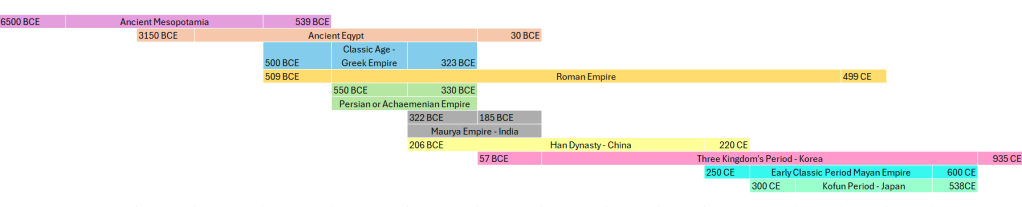
57 to 935 CE
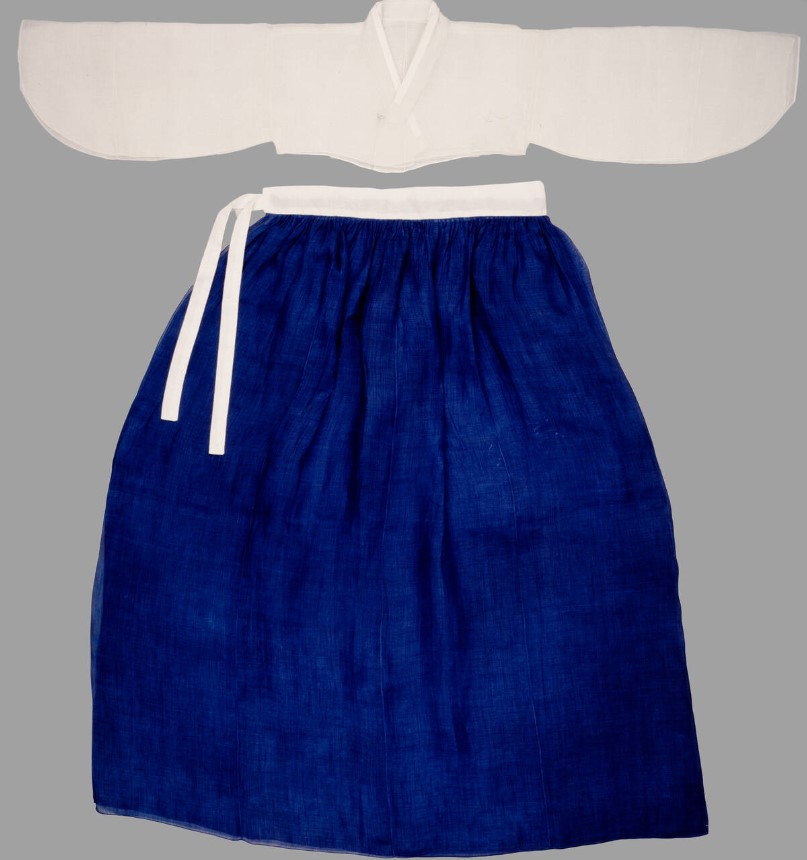
The most iconic garment of Korea is the Hanbok. While the garment is slightly different from male to female the general silhouette is the same. The traditional male garment consists of the Jeogori (Jacket) and the Baji (Trousers).1 The traditional female garment consists of Jeogori (Jacket) and the Chima (Skirt).1 Although the Baji are assigned to males and the Chima are assigned to female there are many depictions show that these were actually interchangeable not dependent on gender.
Fabrics use to make Hanbok’s are traditionally silk, hemp, ramie, and cotton.2 The colours of the fabric used are representative, example: red is vitality or blue is tranquility.1 Outside of colour embellishments were also used as different representative means like phoenixes telling the story of harmony and prosperity.1 While these garments will change over the years the basic silhouette and designs are still the same as what citizens of the Kofun period would recognize.
- Civilisable, (Ret. 2024), Traditional Korean Clothing: Roots, Customs, and Its Cultural Impact, https://civilisable.com/traditional-korean-clothing/
- Kim, J., (2022), Hanbok – traditional Korean dress, Victoria and Albert Museum, https://www.vam.ac.uk/articles/hanbok-traditional-korean-dress
Virtual Exhibit
ArtPlacer
 Looking Back to Move Forward