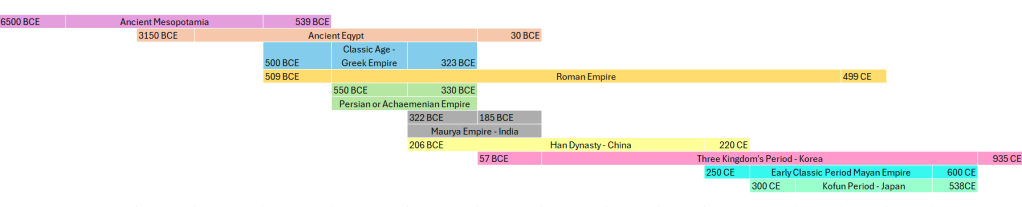
206 to 220 CE
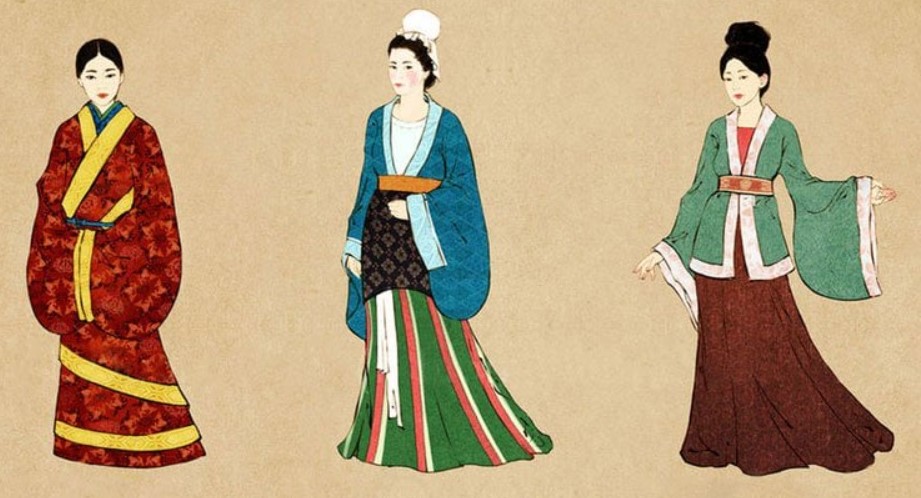
Traditional Chinese clothing is called a Hanfu which covers a variety of types of garments that are national clothing of the Han people.1 The influence of these garments stretched across Asia during this period with similar silhouettes being adopted in Korea, Japan, and Vietnam.1 This came about through travel, trade, and warring empires.
The basic female garment is a Ruqun. Ru is the upper garment which is a cross collar shirt and the Qun is a wrapped skirt.1 These garments could be made of silk, hemp, or cotton depending on ones social status.2 Social status also affected the colours that were to be worn, particularly red and yellow were reserved for the royalty of the era.2
Patterns of designs and embellishments were influenced by mythology and religious beliefs. Garment designs are incorporated to provide the wearer with luck and protection.2 These garments were often accessorized with metals or jade, which would also show the wearers status.2
Hanbok’s for both men and women are very versatile. With the flowy silhouette of the design it allows the wearers to move freely. Depending on the fabric used the garments can be light for warmer weather or heavier for cooler weather. With the adopting of similar garments across Asia at the time it shows us how adaptable these garments are.
- China Highlights, (Ret. 2024), 4 Traditional Chinese Clothing and Dress, https://www.chinahighlights.com/travelguide/traditional-chinese-clothes.htm
- User, (2024, February 12), Ancient Chinese Clothing Han Dynasty: Fashion Through Time, Ancient Dynasties, https://ancientdynasties.com/ancient-chinese-clothing-han-dynasty-fashion-through-time/
Virtual Exhibit
ArtPlacer
 Looking Back to Move Forward