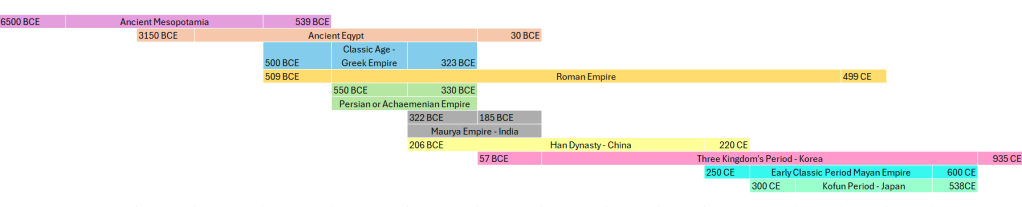
6500 to 539 BCE
While the civilization of Ancient Mesopotamia spanned a long period the garments worn by the citizens changed minimally throughout the time.
Garments were made of wool, leather, plant material, and later linen.1 While bone needles did exist at this time most early garments were wrapped or tied. Early garments were the same for men and women consisting of a wrapped skirt
called a Kaunake paired with a shawl that wrapped over the shoulders.2
It is vastly debated what these garments were made of. The prevalent thoughts are leaves, feathers, or wool that is shaped into leave like petals.2 Once linen was introduced into the society garments began to consist of long lengths of linen fabric that were wrapped around the waist and then draped over the upper body. The colours of the fabric length and embroidery embellishments
changed depending on social status. Lower status’ wore clothing of natural
colours like browns, greens, oranges, or greys; whereas higher ranking individuals wore colours like royal purple which was quite costly and time consuming to make.2
1. Mark, J.J., (2023, March 16), Fashion & Dress in Ancient Mesopotamia, World History Encyclopedia, https://www.worldhistory.org/article/2198/fashion–dress-in-ancient-mesopotamia/
2. The Ultimate Fashion History, (2015, November 29), The Ultimate Fashion History: Mesopotamia, YouTube, https://youtu.be/-aTPB6YnAEA?si=gpf5sjYncwXdykXr

Virtual Exhibit
ArtPlacer
 Looking Back to Move Forward